Summer is drawing to a close and the sun is fading, but maintaining a tanned appearance even at the start of autumn remains an easily achievable goal, even without exposure to the sun’s rays, thanks to the use of self-tanning products.
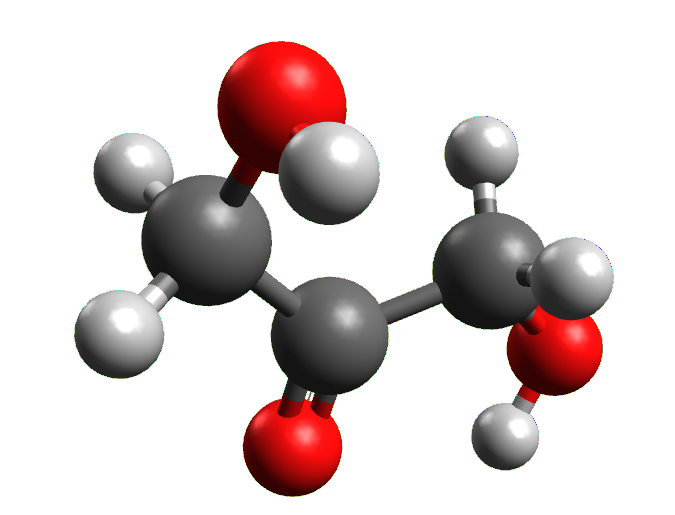
Self-tanners are products based mainly (3–5%) on dihydroxyacetone, abbreviated to DHA; the higher the concentration, the more pronounced the tanning effect, though this is accompanied by a greater likelihood of streaks after application.
To mitigate this drawback, DHA is combined with erythrulose, a substance that produces a more gradual tanning effect.
There are now various products on the market designed to give a fake tan, but the first self-tanning lotion dates back to the 1960s. However, it had not been fully perfected as it presented a number of problems, such as streaky tans and garish orange hues, which have gradually been resolved over time.
DHA acts on the dead cells found on the skin’s surface. The amino acids contained within these cells react with the DHA to form melanoidins through the Maillard reaction—the same process that occurs when food is cooked and which, for example, gives bread its aroma and meat its golden colour. Melanoidins are colloidal molecules containing a benzoic ring, and it is precisely because of this chemical structure that, in self-tanners, they absorb light wavelengths in the visible spectrum, producing a skin-darkening effect.
Furthermore, the effect of DHA is not immediate. In fact, the skin begins to take on a golden hue after 2–4 hours, and the lotion continues to work and darken the skin for up to 72 hours. The effect then lasts for around ten days, which is the time it takes for the skin to shed dead cells.
Even a fake tan has a downside. Studies on self-tanning products have shown that they make the skin much more sensitive to ultraviolet rays and that, twenty-four hours after application, the free radicals produced exceed by 180% the amount normally produced by untreated skin. For this reason, the latest self-tanning products include a sunscreen in their formulation. However, if you are going to be exposed to the sun after applying a self-tanning lotion, it is safer to apply a sunscreen with an appropriate SPF (Read the factsheet on The Chemistry of Sunscreens).
It’s not easy to apply self-tanning lotions evenly, and yet it’s not easy to remove them either. There are several practical methods for achieving a good result; one of the best is to add a generous amount of body oil to a bath filled with water and soak in it, as the oil breaks down the DHA and allows the tan to be washed away.
ACTIVITY: use your biology textbook and consult the internet to explain, in a short essay, how melanin works, which cells produce it, and how its levels vary with age