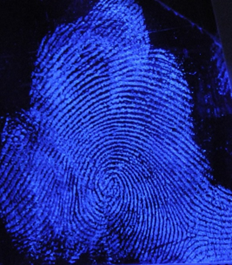
In all movies and detective series when the forensic police arrive at the crime scene they spray luminol solution everywhere to possibly achieve a pale blue luminescence when they come in contact with traces of blood invisible to the naked eye.
From a chemical standpoint, luminol means 5-amino-2,3-dihydro-1,4-phthalazinedione, but it is not used pure, but mixed with other chemicals that are essential for the desired reaction to occur.
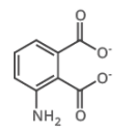
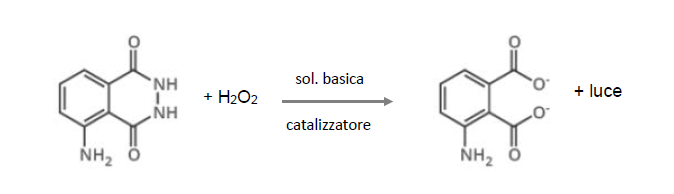
The luminol solution also contains an oxidizing agent, hydrogen peroxide, and an alkaline solution of sodium hydroxide that creates the basic environment for the reaction. It is at this point that the blood comes into play because the iron atoms in hemoglobin act as catalysts, promoting the oxidizing action of hydrogen peroxide. The reaction produces energy by promoting the electrons in the reaction product, 3-aminophthalate, to higher energy levels (excited state). When the molecule relaxes, that is, the electrons return to the fundamental state, they release energy in the form of light (photons), resulting in the phenomenon of blue chemiluminescence.
In detective series, luminol is proposed as the solution for finding evidence of occult blood presence. In reality, this is not quite the case because luminescence lasts only 30 seconds and must be recorded and documented immediately. In addition, there are several substances that have catalyzing power on luminol, such as bleach, rust and peroxidase enzymes, which can give false positives. Not least, there is the problem that the luminol solution can damage other evidence such as the presence of enzymes and proteins, or, being an aqueous solution, it can cause dilution in blood prints, creating a smear that makes them illegible. Thus, luminol, while a valuable tool in investigations, is used provably more in television series than in reality.
Luminol is still used at the crime scene by Police and Carabinieri forensic investigation departments, but in a very targeted way because it is a highly toxic substance, and flanked by other confirmatory tests.
In addition to blood investigative applications, luminol is used in biochemistry to search for copper, iron, and cyanide and to identify specific proteins.
ACTIVITY: fingerprints are mainly taken at the crime scene. Why? Research the chemical methods of fingerprinting.